
By Harold D. Stolovitch & Erica J. Keeps
hstolovitch@hsa-lps.com & ekeeps@hsa-lps.com
 When
creating products and services for an organization, there is a saying
that goes like this: "Good, fast, cheap - choose two." In other
words, if you want it fast and good, it will cost you a lot. Is it fast
and cheap you desire? Then the quality of the result will suffer. Are
good and cheap your choices? Sorry, but you won't get it quickly; we'll
do it when we can. In this article, we offer all three to you. We introduce
you to six cognitive strategy groupings that you and your learners can
apply. These strategies have been shown to help speed up learning, make
it stick more powerfully and longer, and actually cost less in time and
energy for both teaching and learning.
When
creating products and services for an organization, there is a saying
that goes like this: "Good, fast, cheap - choose two." In other
words, if you want it fast and good, it will cost you a lot. Is it fast
and cheap you desire? Then the quality of the result will suffer. Are
good and cheap your choices? Sorry, but you won't get it quickly; we'll
do it when we can. In this article, we offer all three to you. We introduce
you to six cognitive strategy groupings that you and your learners can
apply. These strategies have been shown to help speed up learning, make
it stick more powerfully and longer, and actually cost less in time and
energy for both teaching and learning.
First, what are cognitive
strategies? We borrow both definitions and much of what follows from three
author-researchers at the University of Illinois: Charles K. West, James
A. Farmer and Phillip M. Wolff (1991). Cognitive strategies are the mental
methodologies we use as we study and learn. Unlike metacognitive skills,
which are higher level, executive skills we deploy for any learning (for
more information on metacognitive skills, click here to view our July
2004 HSA e-Xpress to view our article "Metacognition: The Executive
Learning Controls"), our cognitive strategies form a database of
thinking and learning packages that we can apply to specific learning
situations. They enable us to organize a piece of learning so we can internalize
and recall it more easily. Let's apply a simple example right now. Examine
the two Lincoln pennies depicted below.

In the coin of the left, Lincoln is facing right. In the coin on the right, he is facing left. Without peeking at a real Lincoln penny, which depiction is correct, A or B?
We have tried this little test with thousands of American adult learners and, amazingly, 70 percent of them select B although they have seen the coin numerous times. They just weren't paying attention. When we ask our audiences if they would bet $10,000 on their selection before we reveal the correct answer, we find very few takers. The correct answer is A.
So, how do we ensure that we remember which direction Lincoln faces? Here's a little statement to help: "Our great President Lincoln always did right by the people." Will you remember now? Probably. But what about the nickel, dime and quarter? Which way do the presidents on these coins face? Here's a cue: "All the other presidents were left behind." Yes, they face left (except for the recently minted new nickel).
What is the point of this coin discussion? It's simple. You will probably remember this set of not very useful facts for the rest of your life. Associating some arbitrary (hence hard to retain) facts with a mnemonic device that's easy and familiar ("…did right by the people…were left behind") is a powerful means for grasping and retaining information. It is part of a cognitive strategy that is good (learn and retain well), fast (you learned it quickly, didn't you?) and cheap (two simple sentences - not much mental storage and retrieval cost).
Now that you have been introduced to cognitive strategy, let's continue to tune your understanding. Cognitive strategies are collections of methods that help people learn. Good learners have a larger repertoire of these strategies and use them more naturally, frequently and appropriately than do poor learners. They also obtain better results. Here are six types of cognitive strategies you can use to transform your learners.
Six types of cognitive strategies
| Clustering: | Different ways to arrange information for easier perception, understanding, retention and recall. Any time you cluster declarative or procedural knowledge into logical, easy-to-understand groupings, you employ a highly successful cognitive strategy. |
| Spatial: | Visual displays of information that lay out a large number of elements in a manner that is easy to comprehend and to retain or recall. Laying out information to be learned in some kind of visual manner often helps learners see how things relate. Common forms of spatial organizers are matrices, flowcharts and pie charts. |
| Advanced organizers: | Organized, short introductory information packages that set an expectation or build a vision. They help the learner picture what's to come and how it relates to prior knowledge or content that has come before. An advanced organizer is usually a brief introduction made prior to getting into a new topic or set of skills that gives the learner a heads-up as to what's coming. It is almost always short. Most times it links prior knowledge to new material and makes comparisons and logical linkages. It may outline the new content and also prepare the learner mentally to approach it with the proper mindset. |
| Image-rich comparisons: | Analogies, metaphors and literal comparisons that build bridges between what the learner already knows and new learning. Throughout our lives we have been taught with image-rich comparisons. We use metaphors in our daily speech: "She's a peach," or "He's a skunk!" Our computer interfaces are built on metaphors. We have a "desktop" on our screen along with menus and icons. The strength of this cognitive strategy lies in the bridge (connection) that is established between what the learner already knows - the familiar - and what is yet to be learned. |
| Repetition: | Activities that allow learners to rehearse content they have encountered and practice it in organized ways until it sticks in the mind. Repetition and rehearsal in their various forms can be immensely effective, especially for long-term, hard-wired learning. Study, memorization, practice, rehearsal, self-test and tests have all demonstrated the power to assist learning. The keys to all of these are organization, meaningfulness and systematic application. Over time, content acquisition improves, as does efficiency in learning. |
| Memory aids: | Groups of easy-to-remember letters, words or images that help store and retrieve more complex material. This cognitive strategy, also known as mnemonics, is a favorite for remembering. Essentially, a mnemonic is a memory crutch - a group of easy to remember letters, words or images that help store and retrieve more complex material. The most common ones include: acronyms, acrostics, rhymes and key words. |
All the
cognitive strategies presented in this article are packages of thinking
modes that we can deploy whenever we wish to learn something. As trainers/instructors/educators,
our mission is to create learning success. It would be wonderful if all
our learners were endowed with high ability, deep prior knowledge, powerful
motivation to learn, possessed well-developed metacognitive skills along
with a large repertoire of oiled and efficient cognitive strategies to
cover every specific learning situation. We simply could lay out the learning
goals, provide the resources and stand back. But that's not reality. Our
learners come to each learning event with a broad range of strengths and
deficiencies, and our job is to structure learning for successful transformation.
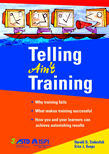
This article is an excerpt from Harold Stolovitch and Erica Keeps' award-winning
bestseller, Telling Ain't Training. Interested in learning more
about cognitive strategies? Click here
to order a copy of the book.

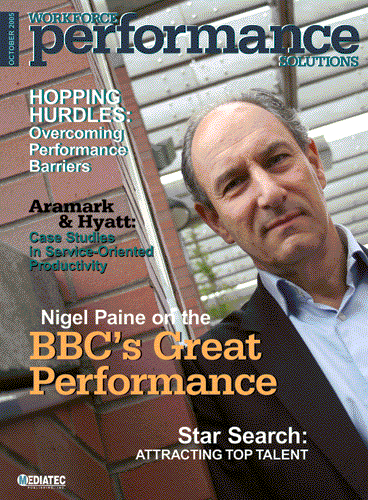 Workforce
Performance Solutions is
a relatively new bi-monthly magazine. It is directed to top-level management,
senior human resources, and workforce and organizational development executives
whose task is to optimize the abilities of their human assets to drive
and improve the execution of enterprise strategy. The magazine features
Harold Stolovitch as a regular contributor with a column entitled "Human
Performance." Here
is a taste of Harold's second column, "HR Professional as Performance
Consultant :"
Workforce
Performance Solutions is
a relatively new bi-monthly magazine. It is directed to top-level management,
senior human resources, and workforce and organizational development executives
whose task is to optimize the abilities of their human assets to drive
and improve the execution of enterprise strategy. The magazine features
Harold Stolovitch as a regular contributor with a column entitled "Human
Performance." Here
is a taste of Harold's second column, "HR Professional as Performance
Consultant :"
“I need a (fill in the blank).” This is generally the opening salvo in a request (read: order) for assistance to overcome a performance problem. The plea is heartfelt. It also is usually couched in terms that express both problem and solution. For example:
- “Our call center is experiencing a tremendous increase in turnover. We need a system to fill vacant positions more quickly. We’re already stretched too thin. We need to speed up the hiring process.”
- “I’m just not seeing performance progress from our sales force. I need a better performance management system that gets them moving and improving.”
- Or
how about this old, familiar saw? “Our (insert job title here)
aren’t producing to standard. I need a training program on (insert
course title here) to improve performance. Make it a one-day program,
and—oh yeah—do it online so they won’t have to travel.”
Too frequently, we respond as dutiful order-takers and get busy fulfilling the request. We work hard, expending tremendous effort and resources to meet some impossible deadline, only to achieve minimal results. Sure, the order was filled. Something wonderful was created– only, not much changed.
You can read the rest of the article by visiting page 16 of the August 2005 digtial edition of Workforce Performance Solutions magazine at http://www.wpsmag.com/digital0805. For more information on Workplace Performance Solutions, visit their Website at www.wpsmag.com. You may qualify for a free issue or subscription. If you have suggestions for Harold to include in his column, please email him at hstolovitch@hsa-lps.com.

 As
of August 15, 2005, the International Society for Performance Improvement
(ISPI) has designated 989 Certified Performance Technologists (CPT) with
an additional 10 applications that are presently being processed. The
next application deadline is November 15, 2005.
As
of August 15, 2005, the International Society for Performance Improvement
(ISPI) has designated 989 Certified Performance Technologists (CPT) with
an additional 10 applications that are presently being processed. The
next application deadline is November 15, 2005.
Certification represents a major step in the evolution of performance technology as a true profession. There are a number of organizations now using the Standards of Performance Technology to select and develop their performance improvement professionals. Some have gone so far as to embed the CPT certification process into their personnel development plan. And, several colleges and universities have adopted the Standards as the underlying structure for their performance improvement curricula.
In meeting standards and criteria as performance improvement practitioners, CPTs demonstate an understanding of what it takes to produce desired, measurable results through a systematic and reproducible process. The certification credential enables Certified Performance Technologists to distinguish themselves in the marketplace to employers and clients.
ISPI now offers a two-day workshop that focuses on the application of the Standards of Performance Technology. Various exercises are conducted to reinforce participants' understanding and use of each of the 10 Standards. Participants will review their readiness to apply for certification using a self-assessment guide; then the CPT application and review process will be presented. CPT application fees are included in the price of the workshop. For more information, please contact certification@ispi.org.
For
more information on ISPI's CPT program,
visit their Website at www.certifiedpt.org.

From time to time, we come across interesting articles that we feel are important to share with others. Our Guest Author Series features these articles by various professional colleagues. The latest in our series is by Beverly Kaye and Sharon Jordan-Evans. Beverly Kaye is CEO and Founder of Career Systems International, one of the nation's leading talent management solution providers. Her ground breaking career development, talent retention, workplace satisfaction and mentoring programs have been implemented by top organizations worldwide. Sharon Jordan-Evans is president of the Jordan Evans Group, an executive coaching, leadership development firm. She was a senior vice president for the Change Management Practice at Drake Beam Morin, one of the country’s largest transition firms. For more information about Beverly Kaye or Sharon Jordan-Evans call 800-577-6916, email hq@csibka.com or visit their Website at www.CareerSystemsIntl.com.
Career Plan Resuscitation (CPR)
Breathe Some Life Back Into Your Work
By Beverly Kaye & Sharon Jordan-Evans
 To
resuscitate your career, own it! This attitude is key. Take steps now
to plan it, build it, and strengthen it. Here's how:
To
resuscitate your career, own it! This attitude is key. Take steps now
to plan it, build it, and strengthen it. Here's how:
- Look at yourself-Examine your interests, values, and work skills. Find out, too, if others see you the way you see yourself.
- Look around - Uncover trends (company/industry), learning pathways (ways to learn new skills), and multiple career options.
- Look ahead-Identify goals, alliances, support. Create your plan.
Look at Yourself
What do you love to do? To create a meaningful career plan, you need to be clear about your interests (the things you like doing-ideas and activities that give fulfillment and pleasure) and your values (ideals you cherish that guide your life at work). To determine those critical variables, ask yourself:
- What accomplishments at work have made me feel particularly proud?
- What makes me feel unique in this organization?
- What kinds of things would I do if I could create my ideal workday?
- What types of work do I avoid?
The things you do well, value highly, and like doing give you a basic map for planning your career. Look for opportunities to do that inside your organization. Also, gather information from several willing feedback providers. Ask them:
- What are my overdone strengths? (Too much of a good thing.)
- What are two skills I should strengthen? How would it help me, given what I want to do?
Seek out your critics. Listen to them. Try to see yourself through their eyes. Get clear about your missing skills, or those skills you overdo.
Look Around
Once you've assessed what you need to learn, you can begin to look around your organization for trends, learning opportunities, and career options. You may be surprised to find projects, task forces, and jobs that will support your goals.
How much do you know about your organization, your industry, and your profession? If you don't know the answers to these questions, ask others:
- What are the major industry, economic, political, and social changes taking place that will affect this organization?
- What are the opportunities and problems ahead?
- How will my profession be different in two years? In five years?
- What counts for success here? How will that change in the future?
Not every step in a career has to be a step up. There are other options (inside the organization) to consider, too. Talk to your boss or other valued advisors to learn about these possibilities:
- Moving laterally-a change in job, but not necessarily a change in level of responsibility
- Exploring-testing and researching changes without permanent commitment
- Enriching-seeding the current job with more chances to learn and grow
- Realigning-adjusting duties to reconcile them with other priorities and future possibilities
Try to imagine at least one move you could make in each of the above directions. What would it look like? How might it match your skills, interests, and values?
Look Ahead
Use the information you now have about yourself, your company, and multiple options to develop your plan. Be ready to answer these questions:
- What new skills, knowledge, or abilities do I need to achieve my goals?
- What are some short-term goals (3 to 6 months) that I could start on right now?
- How can I gain the new skills that will help me with my goals while in my current job?
- What relevant experiences can I have through serving on committees and task forces?
- Who in my network can help?
A clear plan of action turns goals into realities if you:
- Write down your goals, exact steps and deadlines. Revise along the way.
- Forge alliances with people who can help you reach your goals: managers, mentors, peers, supporters.
- Seek learning. Get training and experience to help you reach your goals.
Career Plan Resuscitation (CPR) is doable if you look at yourself, look around, and look ahead. You're in charge of your career. You manage it within your company, within this economy, and with the capabilities and resources that you have.
This is an excerpt
from Love It, Don't Leave It: 26 Ways to Get What You Want at Work
(Berrett-Koehler, 2003) by Beverly Kaye and Sharon Jordan-Evans. Bev and
Sharon are also co-authors of the best-selling Love 'Em or Lose 'Em:
Getting Good People to Stay (Berrett-Koehler, 1999 & 2002). For
more information on either book, visit www.KeepEm.com
or www.LoveItDontLeaveIt.com.
Do you have an article you would like us to consider including in our Guest Author Series? If so, please contact Erica Keeps at ekeeps@hsa-lps.com.

 Harold
Stolovitch will be presenting at ASTD's Telling Ain't Training Mini-Conference
from October 20 - 21 in Atlanta, GA. For more information, click here.
He will also be presenting a keynote address at the Chief Learning
Officer Magazine's Learning Leader's EMEA 2005 Symposium from November
2 - 4 in Barcelona, Spain and two half-day seminars for ASTD's Central
Indiana Chapter on November 17 in Indianapolis, IN. Click here
to view HSA's Events Calendar to learn where and when Harold will be speaking
as well as to read session descriptions.
Harold
Stolovitch will be presenting at ASTD's Telling Ain't Training Mini-Conference
from October 20 - 21 in Atlanta, GA. For more information, click here.
He will also be presenting a keynote address at the Chief Learning
Officer Magazine's Learning Leader's EMEA 2005 Symposium from November
2 - 4 in Barcelona, Spain and two half-day seminars for ASTD's Central
Indiana Chapter on November 17 in Indianapolis, IN. Click here
to view HSA's Events Calendar to learn where and when Harold will be speaking
as well as to read session descriptions.

 Do
you have any burning human performance technology questions? Visit the
Ask Harold section of HSA's Website
and ask your questions for Harold Stolovitch to answer. Here is a recent
submission that might intrigue you:
Do
you have any burning human performance technology questions? Visit the
Ask Harold section of HSA's Website
and ask your questions for Harold Stolovitch to answer. Here is a recent
submission that might intrigue you:
What is conceptual skill and why is it important to top management?
To read the response, visit Ask Harold. To ask your own question, just click on the crystal ball above, fill out the form and click submit.

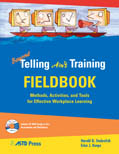
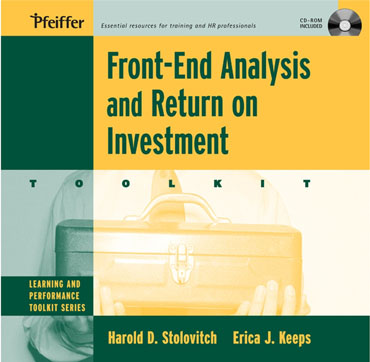
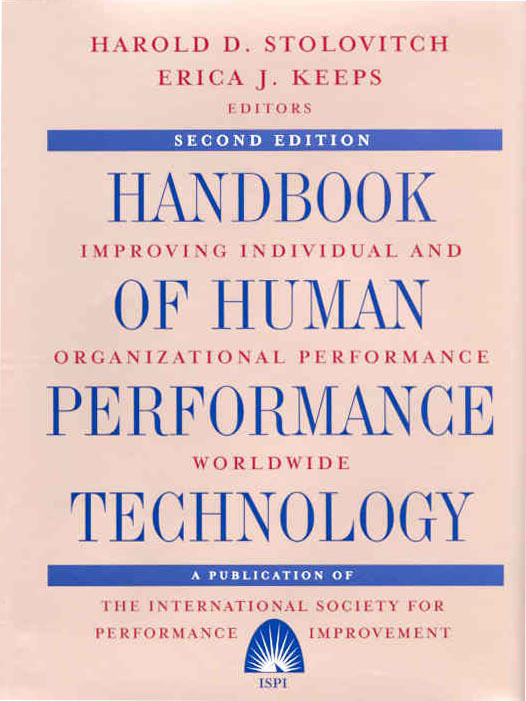
Click on any of the covers below for more information or to buy copies of our books.
The runner and the drama queen wish everyone a wonderful Thanksgiving and holiday season!For more information on HSA, visit our Website
at www.hsa-lps.com, email us at info@hsa-lps.com
or call us toll free at (888) 834-9928.If you have any questions or comments, please feel free to contact Samantha Greenhill, Publications and Communications Specialist, at sgreenhill@hsa-lps.com.


To unsubscribe from this Newswire, please reply to this email and put the word UNSUBSCRIBE in the subject line.
© Copyright 2005 Harold D. Stolovitch & Erica J. Keeps